MOTS-c is a 16-amino-acid peptide (MRWQEMGYIFYPRKLR) encoded by a short open reading frame in the mitochondrial 12S rRNA gene, first reported in 2015.
With humanin, it belongs to the mitochondrial-derived peptides: signalling peptides encoded in mitochondrial rather than nuclear DNA.
PubChem lists MOTS-c under CAS 1627580-64-6 and CID 146675088, with formula C101H152N28O22S2 and molar mass 2174.6 g/mol.
Two methionines and a tryptophan make MOTS-c prone to oxidation, so air, moisture and light all matter in storage.
MOTS-c is a 16-amino-acid peptide encoded not in the cell nucleus but in mitochondrial DNA, inside the gene for 12S ribosomal RNA. Its sequence is MRWQEMGYIFYPRKLR,1 and it was first reported in 2015. The name stands for mitochondrial open reading frame of the 12S rRNA-c.
This profile describes the compound as a laboratory chemical: identity, structure, analytical checks, handling and regulation. Titan Peptides supplies it for laboratory and research use only; it is not for human consumption.
MOTS-c at a glance
Property
Detail
Full name
Mitochondrial open reading frame of the 12S rRNA-c
Short open reading frame within the mitochondrial 12S rRNA gene; first reported 2015
What is a mitochondrial-derived peptide?
Mitochondria carry their own small circular genome, separate from the DNA in the nucleus. In textbook descriptions it encodes a handful of proteins of the oxidative phosphorylation system, plus the ribosomal and transfer RNAs mitochondria need to make them. The discovery of humanin, a signalling peptide encoded by a short open reading frame (sORF) in mitochondrial DNA, suggested that other hidden peptide-coding sequences might exist there. MOTS-c came from that search: a 51-base-pair sORF inside the 12S rRNA gene that yields a 16-residue peptide. Humanin and MOTS-c are now grouped together as mitochondrial-derived peptides.
A 2018 cell-culture study from the group that first described it reported that, in cultured cells under nutrient stress, MOTS-c moves from the cytoplasm into the nucleus, where it interacted with the transcription factor NRF2. The authors presented this as evidence that the mitochondrial and nuclear genomes encode factors that cross-regulate each other.2
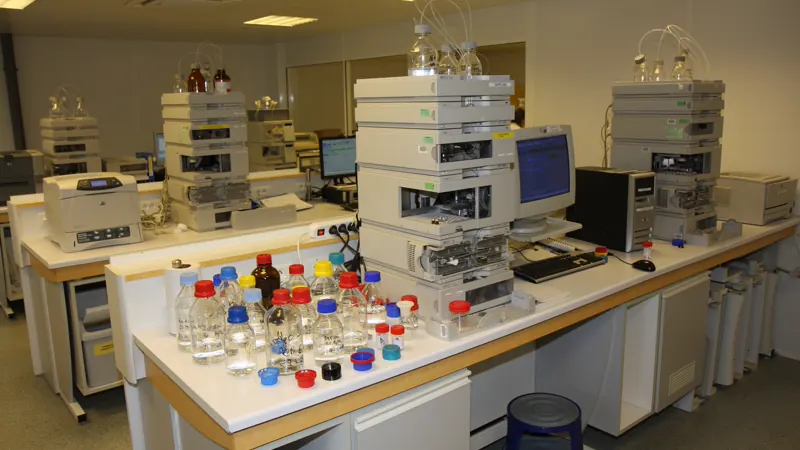
MOTS-c carries two methionines (positions 1 and 6) and a tryptophan (position 3), residues the storage literature flags as prone to oxidation. Oxidation of a methionine adds about 16 Da per oxygen atom, so an oxidised impurity shows up in a mass spectrum just above the expected 2174.6 g/mol; see how HPLC and mass spectrometry test peptide identity and purity. The sequence also carries four basic residues (arginines at positions 2, 13 and 16, and a lysine at 14) against one acidic residue (glutamic acid at position 5), which matters when choosing a solvent; our reconstitution guide explains the counting rule.
Storage and handling
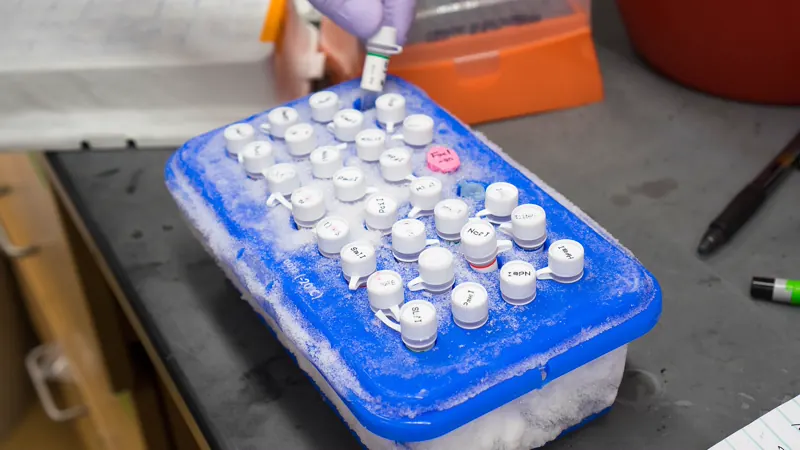
Store the vial sealed, dark, dry and frozen; supplier guidance runs from −20 °C for short periods to −80 °C for long-term storage. Warm it to room temperature inside a desiccator before opening so no condensation forms on the powder, then reseal promptly; for methionine- or tryptophan-containing sequences, flushing the headspace with nitrogen or argon is recommended. Solutions keep poorly: split a stock into single-use aliquots, freeze them and do not refreeze a thawed tube. More on storing lyophilised and reconstituted peptides.
MOTS-c in Australia
Australia's June 2026 Poisons Standard does not name MOTS-c.3 No product containing it is an approved therapeutic good. How a product is supplied and presented also shapes its legal position, because the Therapeutic Goods Act 1989 covers goods presented as, or likely to be taken as, being for therapeutic use; our guide are research peptides legal in Australia? sets out the framework.
Frequently asked questions
What is MOTS-c?
MOTS-c is a 16-amino-acid peptide, MRWQEMGYIFYPRKLR, encoded by a short open reading frame in the mitochondrial 12S rRNA gene rather than in nuclear DNA. It was first reported in 2015 and is grouped with humanin as a mitochondrial-derived peptide.
What is a mitochondrial-derived peptide?
A signalling peptide encoded in mitochondrial DNA rather than in the nucleus. Mitochondria have their own small genome; humanin and MOTS-c are both encoded by short open reading frames within it, which is why they are grouped together as mitochondrial-derived peptides.
What is MOTS-c's CAS number?
PubChem lists MOTS-c under CAS number 1627580-64-6 and CID 146675088, with the sequence MRWQEMGYIFYPRKLR, the molecular formula C101H152N28O22S2 and a molar mass of 2174.6 g/mol. These identifiers let you match a vial, its documentation and the literature to the same molecule.
Why is MOTS-c prone to oxidation?
Its sequence contains two methionines and a tryptophan, the residues most susceptible to oxidation. Oxidation of a methionine adds about 16 Da, which mass spectrometry detects. Storing the vial sealed, dark, dry and frozen, and flushing the headspace with nitrogen or argon, limits the problem.
References
National Center for Biotechnology Information. PubChem Compound Summary for CID 146675088, MOTS-c. Accessed 21 September 2026. Source
Kim KH, Son JM, Benayoun BA, Lee C. The mitochondrial-encoded peptide MOTS-c translocates to the nucleus to regulate nuclear gene expression in response to metabolic stress. Cell Metab. 2018;28(3):516-524.e7. PubMed 29983246
Therapeutic Goods (Poisons Standard—June 2026) Instrument 2026 (Standard for the Uniform Scheduling of Medicines and Poisons No. 48), F2026L00633. Commenced 1 June 2026. Federal Register of Legislation. Source
Research use only. This article summarises published scientific literature
for educational purposes. It is not medical advice and does not describe or endorse human
or veterinary use. Compounds supplied by Titan Peptides are for laboratory research only
and are not approved therapeutic goods in Australia.
A laboratory guide to storing lyophilised and reconstituted peptides: freezer temperatures, moisture, oxidation-prone residues, light, freeze–thaw cycles and adsorption to containers.
How reverse-phase HPLC and mass spectrometry are used to test peptide purity and identity, how to read a chromatogram and a mass spectrum, and what each method cannot tell you.
A plain-English primer on research peptides: what a peptide is, how peptides are built one amino acid at a time on a resin bead, why they arrive as a freeze-dried powder, and what "research use only" does and does not mean.