Retatrutide (LY3437943) is a synthetic, fatty-acid-modified peptide that acts as an agonist at the GIP, GLP-1 and glucagon receptors, hence "triple agonist".
Its chain contains non-coded residues (α-aminoisobutyric acid at position 2, α-methyl-L-leucine at position 13) and a fatty diacid linked to lysine 17.
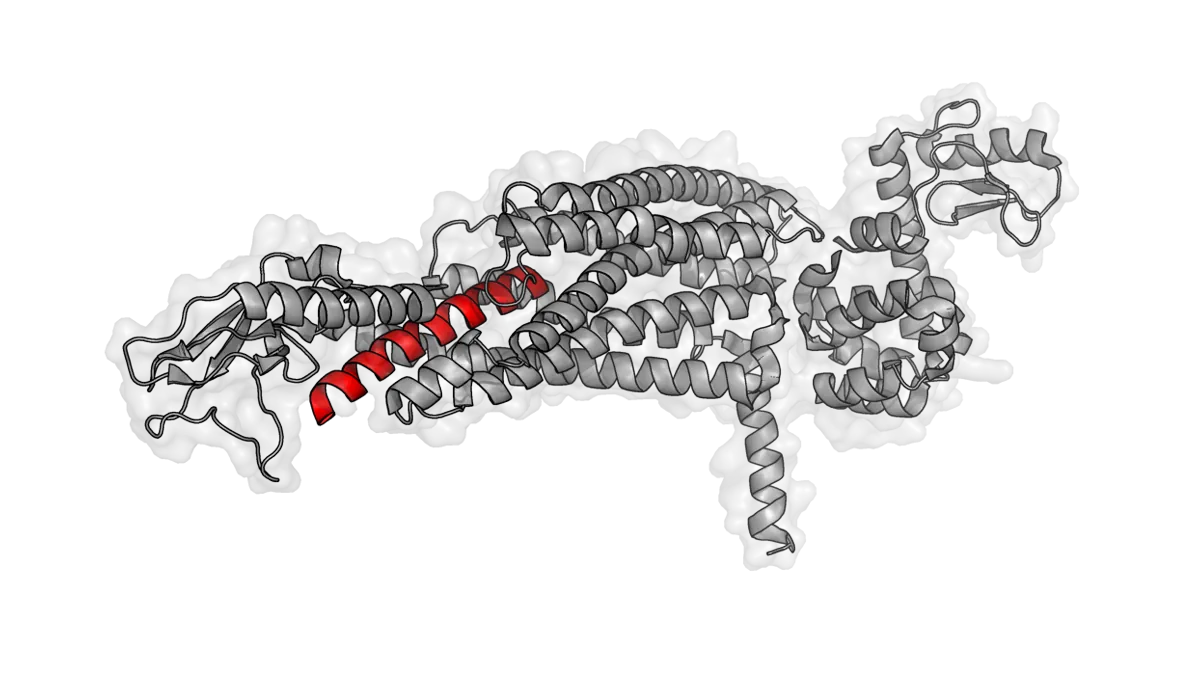
A 2024 cryo-electron microscopy study showed the peptide bound to each of the three receptors as a single continuous helix.
Retatrutide is an investigational compound, not approved anywhere; the TGA names it as an example of an unapproved peptide product.
Retatrutide (development code LY3437943) is a synthetic, fatty-acid-modified peptide that acts as an agonist at three receptors: the GIP, GLP-1 and glucagon receptors. That is why it is called a triple agonist.2 It is an investigational compound developed by Eli Lilly and Company and is not approved as a medicine in any country; research-grade retatrutide is a laboratory reagent, not the developer's material.
This profile describes the compound as a laboratory chemical: identity, structure, analytical checks, handling and regulation. Titan Peptides supplies it for laboratory and research use only; it is not for human consumption.
Retatrutide at a glance
Property
Detail
Development code
LY3437943
Class
Synthetic, fatty-acid-modified peptide; agonist at the glucagon (GCGR), GIP (GIPR) and GLP-1 (GLP-1R) receptors
Sequence
Cannot be written fully in standard one-letter code: the chain includes non-coded residues (α-aminoisobutyric acid, Aib, at position 2 and α-methyl-L-leucine at position 13) and a fatty diacid attached through a linker to the lysine at position 17
Molecular formula
C221H342N46O68 (PubChem)
Molar mass
4731 g/mol (PubChem computed value)
CAS number
2381089-83-2 (PubChem depositor records)
Developer
Eli Lilly and Company
Status
Investigational; not approved in any country
Identifiers are from PubChem; the structural description is from the 2024 receptor-structure study.12
What does "triple agonist" mean?
GLP-1 and GIP are incretin hormones and glucagon is a pancreatic hormone; each acts through its own G protein-coupled receptor. An agonist is a molecule that binds a receptor and activates it. Single-receptor and dual-receptor peptides in this family already exist; retatrutide was designed to activate all three receptors with one molecule.
A 2024 cryo-electron microscopy study solved the structures of retatrutide bound to each of the three receptors, showing that the peptide adopts a single continuous helix in each receptor.2
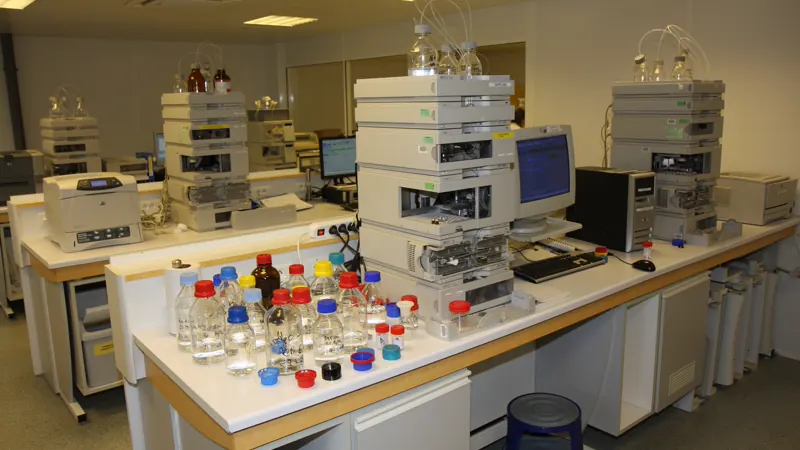
Because retatrutide contains α-aminoisobutyric acid, α-methyl-L-leucine and a fatty diacid on a linker, its identity cannot be checked against a simple one-letter sequence. Mass is the practical anchor: PubChem gives a computed molar mass of 4731 g/mol for the formula C221H342N46O68.1 A peptide of this size appears in an electrospray mass spectrum as a series of multiply charged ions rather than a single peak, which is covered in our guide to how HPLC and mass spectrometry test peptide identity and purity. Documentation should state which form, and which counter-ion, a stated mass refers to.
Storage and handling
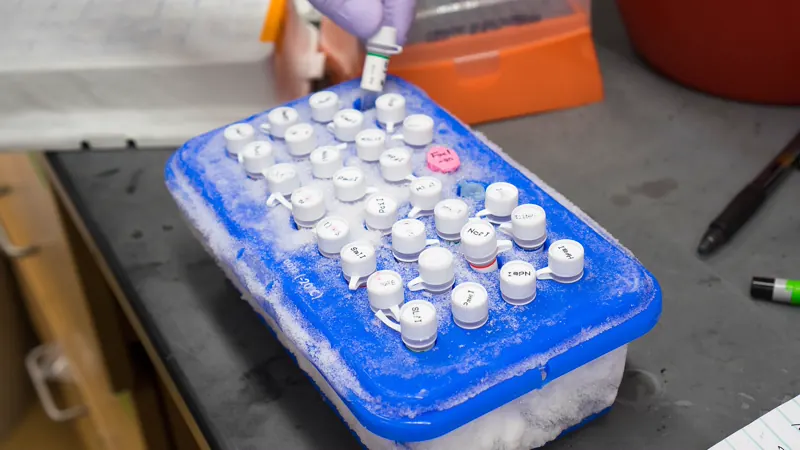
Store sealed vials dry, dark and frozen at −20 °C or colder, moving to −50 to −80 °C for long-term storage, and let each vial reach room temperature in a desiccator before opening. Keep solutions short-lived: divide a reconstituted stock into single-use aliquots, freeze them and avoid freeze–thaw cycles. Container choice matters at low concentrations, too, so check recovery from the tubes you use rather than assume it. See storing lyophilised and reconstituted peptides.
Retatrutide in Australia
Retatrutide is not named in the June 2026 Poisons Standard.3 The TGA's 13 April 2026 safety advisory nonetheless names retatrutide as an example of an unapproved peptide product, one that has not been evaluated by the TGA for safety, quality or effectiveness, and states that a "research use only" disclaimer does not make supply lawful.4 For how Australian law treats research peptides generally, see are research peptides legal in Australia?
Frequently asked questions
What is retatrutide?
Retatrutide, development code LY3437943, is a synthetic, fatty-acid-modified peptide developed by Eli Lilly. It is a single molecule that acts as an agonist at three receptors: the GIP, GLP-1 and glucagon receptors. It is an investigational compound and is not an approved medicine in any country.
What does triple agonist mean?
A triple agonist is a single molecule that binds and activates three different receptors. Retatrutide acts at the receptors for GIP and GLP-1, two incretin hormones, and for glucagon, a pancreatic hormone. A 2024 cryo-electron microscopy study showed it bound to each receptor as a single continuous helix.
What is retatrutide's CAS number?
PubChem depositor records give retatrutide the CAS number 2381089-83-2, and PubChem (CID 171390338) lists the formula C221H342N46O68 with a computed molar mass of 4731 g/mol. Its sequence cannot be written fully in one-letter code because it contains non-coded residues and a fatty diacid.
Is retatrutide approved in Australia?
No. Retatrutide is not approved by the TGA or by any other regulator. It is not named in the June 2026 Poisons Standard, but the TGA lists it as an example of an unapproved peptide product and says a research-use-only label does not make supply lawful.
References
National Center for Biotechnology Information. PubChem Compound Summary for CID 171390338 (retatrutide substance records, CAS 2381089-83-2, LY3437943). Accessed 21 September 2026. Source
Li W, Zhou Q, Cong Z, et al. Structural insights into the triple agonism at GLP-1R, GIPR and GCGR manifested by retatrutide. Cell Discov. 2024;10(1):77. PubMed 39019866
Therapeutic Goods (Poisons Standard—June 2026) Instrument 2026 (Standard for the Uniform Scheduling of Medicines and Poisons No. 48), F2026L00633. Commenced 1 June 2026. Federal Register of Legislation. Source
Therapeutic Goods Administration. Understanding your responsibilities when importing, compounding and supplying unapproved peptide products (safety advisory). Published 13 April 2026. Source
Research use only. This article summarises published scientific literature
for educational purposes. It is not medical advice and does not describe or endorse human
or veterinary use. Compounds supplied by Titan Peptides are for laboratory research only
and are not approved therapeutic goods in Australia.
What the TGA, the June 2026 Poisons Standard, the Therapeutic Goods Act and customs law actually say about peptides, "research use only" labels, import controls and advertising in Australia.
A laboratory guide to storing lyophilised and reconstituted peptides: freezer temperatures, moisture, oxidation-prone residues, light, freeze–thaw cycles and adsorption to containers.
How reverse-phase HPLC and mass spectrometry are used to test peptide purity and identity, how to read a chromatogram and a mass spectrum, and what each method cannot tell you.